
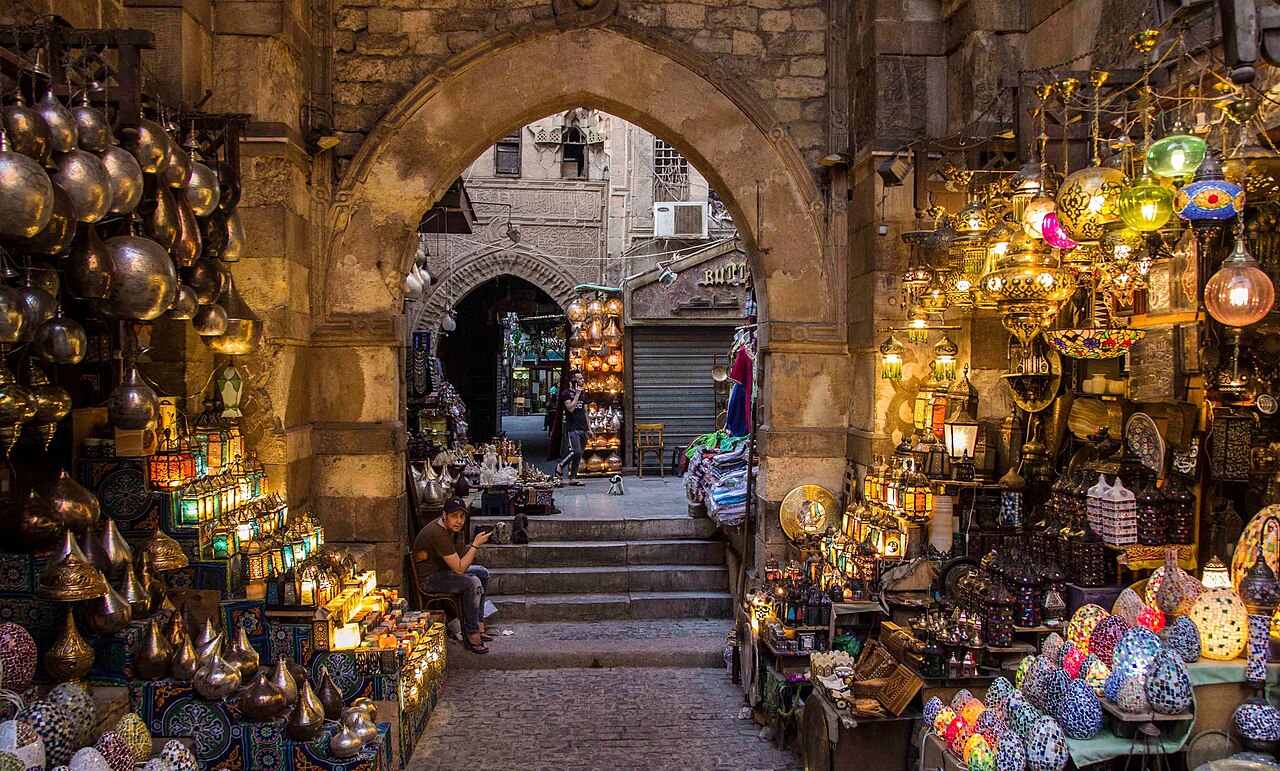
4–5 hours
Cairo & GizaNew
Khan El Khalili Bazaar & Cairo Shopping Tour
From
$25.20
per person
6+ people · Private car + guide
Koshary, ful, molokhia and six more — what goes into each, the best place to eat it, and which to order first.
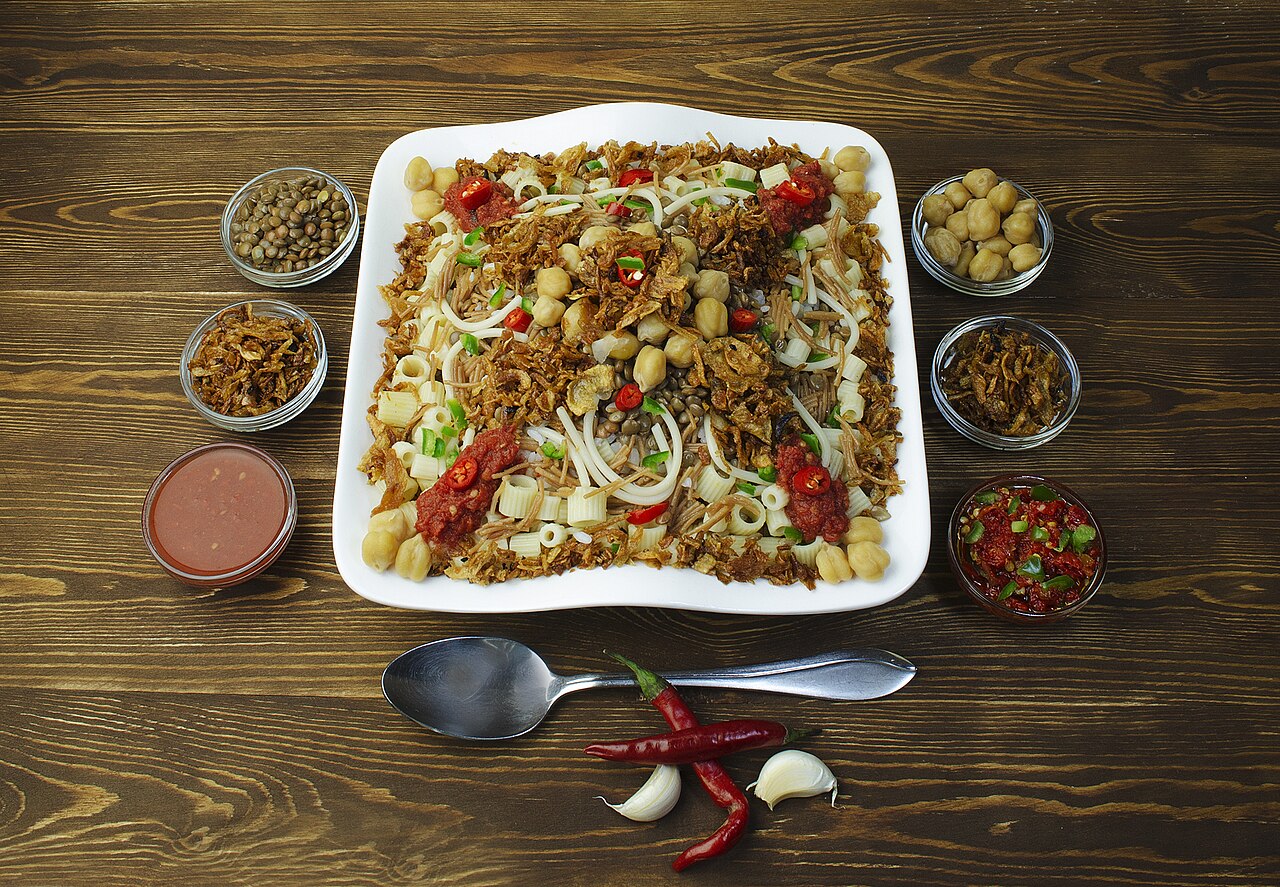
Everyday Egyptian food is street food — beans, bread and long-cooked greens — and most visitors never taste it, because hotel buffets serve an international menu. Put that right.
The dish Egypt calls its own: rice, brown lentils, macaroni and chickpeas under crunchy fried onions, a tomato sauce and a garlic-and-vinegar sauce called daqqa. Chilli as you like it.
It costs about a dollar, happens to be completely vegan, and the best shops have served nothing else since the 1940s.
Fava beans cooked overnight in a copper pot, then mashed with olive oil, cumin, lemon and garlic. It is breakfast for most of the country, eaten by tearing off baladi bread and using it as a spoon.
Egypt's falafel is made with fava beans instead of chickpeas, so it is green inside and much lighter. Eat it hot off the griddle, packed into bread with tahini, tomato and pickles.
Jute leaves cooked with garlic and coriander into a thick green soup, spooned over rice with chicken or rabbit. People love or hate the texture, for life. Have it once: it is among the oldest dishes in Egypt, with roots in pharaonic times.
Baladi bread stuffed with minced meat, onion, chilli and parsley and baked until the crust crisps and soaks up the juices. Buy it from a bakery rather than a restaurant.
Vine leaves, courgettes, peppers or cabbage filled with herby rice and cooked slowly. Each family has its own version, and each is sure theirs is the best.
Pastry folded over dozens of times and baked until it flakes apart — sweet with honey and cream, or savoury with cheese and meat.
Egypt's favourite dessert: torn pastry baked in milk with nuts, raisins and coconut, served hot. It is named after the wife of a 13th-century sultan, in a story rather too gruesome to tell here.
Squeezed while you wait at the green-painted stands on street corners. Cheap, ice-cold, and nicer than you would expect.
Karkadeh — hibiscus tea, hot in winter and iced in summer, deep red and a little sour. The best is in Aswan. Sahlab — warm thickened milk with cinnamon and nuts, for winter. Egyptian tea — black and strong, in a glass, with lots of sugar unless you ask for none.
Choose places that are busy. A koshary counter serving two hundred people an hour is much safer than a quiet buffet under a heat lamp. Skip raw salad washed in tap water outside good restaurants, drink bottled water, and you will be fine.
6+ people · Private car + guide